

Why this year’s smartest demand gen strategies start after the click - and go far beyond MQLs
Everyone’s obsessed with leads. “We need more leads.” “Fill the funnel.” “Run the webinar, get the names.”
Yawn.
If your B2B SaaS team is still chasing MQLs like it’s 2015 and mistaking lead volume for pipeline quality, we’ve got news for you: the buyers have evolved. The funnel is flatter. Buying committees are bigger. And trust is the new currency.
So what actually works in 2025? Let’s look at the smartest strategies that the top-performing SaaS companies are using right now - the real demand-gen muscle that moves pipeline, not the theoretical rubbish or decade-old playbooks.
MQLs are on Life Support
Once upon a time, someone downloaded a whitepaper and a BDR called them 15 minutes later. Cue the sad trombone.
Today’s B2B buyers ghost you faster than a Tinder match after you mention lead scoring. They don’t want to “book a discovery call.” They want clarity. Credibility. And a little peace and quiet, please.
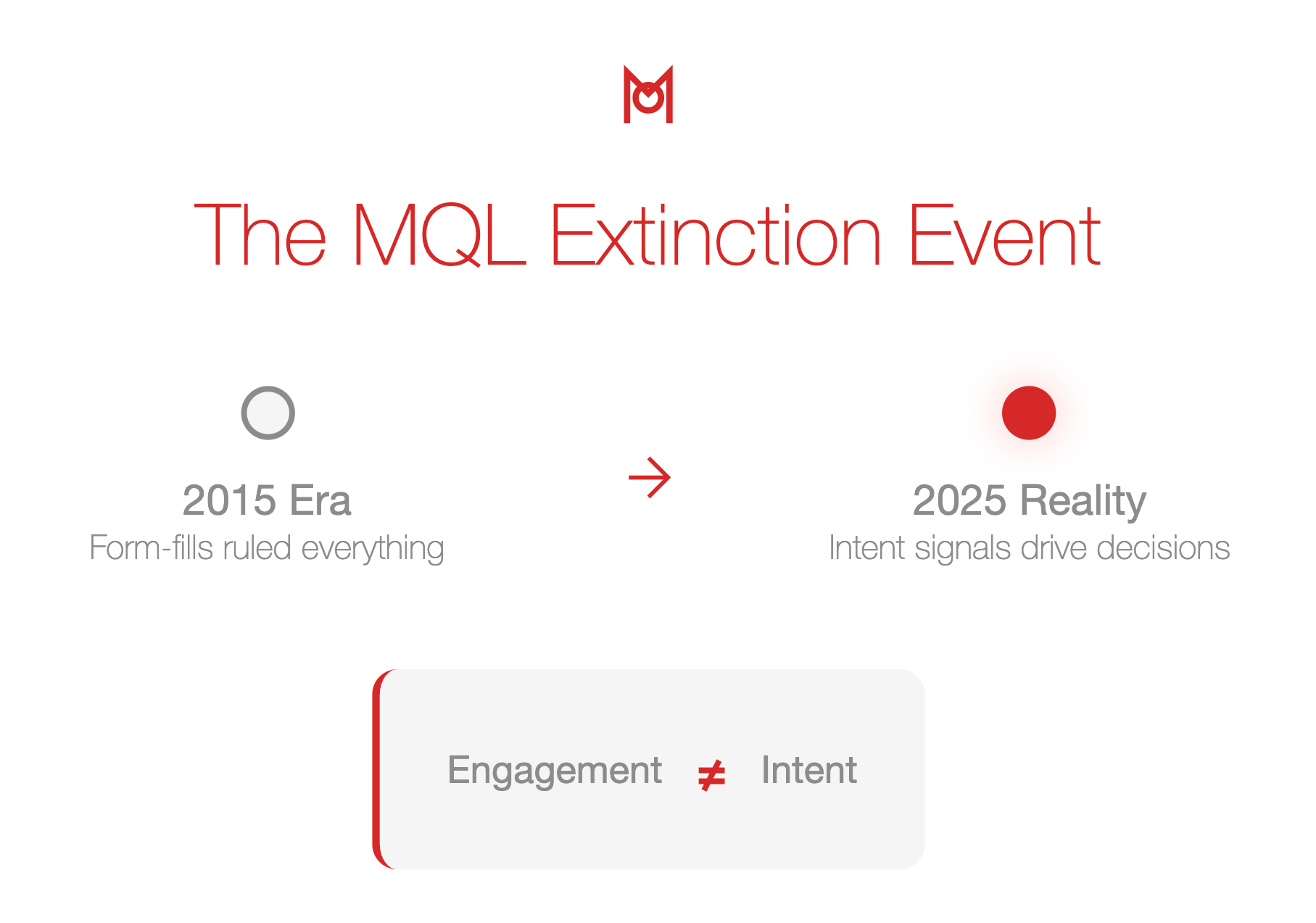
We’re seeing the shift from:
- Form-fills ➝ First-party intent signals
- Nurture emails ➝ Self-serve buyer enablement
- MQLs ➝ Revenue-qualified pipeline
And it’s not just talk. Gong, HubSpot, and Mutiny are all openly killing or reworking the MQL metric. Because guess what? Engagement ≠ intent.
The Rise of Demand Capture and Demand Creation (Yes, Both)
Here’s where the marketers-who-actually-get-promoted are focusing:
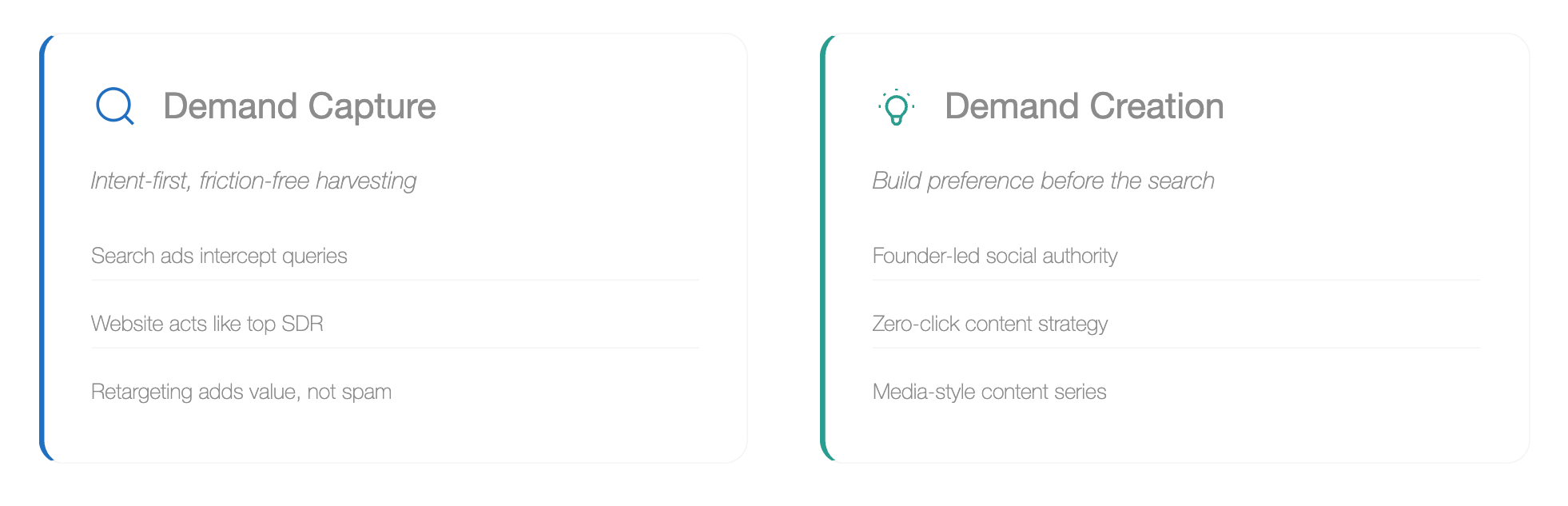
1. Demand Capture: Intent-first, Friction-free
Let’s be blunt. If someone’s searching “best SOC 2 automation platform”, don’t send them to a blog post that ends with a gated eBook.
Instead:
- Use search ads to intercept high-intent queries with clear, bottom-of-funnel offers (think demo, pricing page, or interactive calculator).
- Optimise your website like it’s your best-performing SDR: clean CTAs, social proof above the fold, live chat with a pulse.
- Accelerate intent with retargeting, not spam - bring value, not banner fatigue.
→ This is the harvest zone. Don’t muck it up.
2. Demand Creation: Build Preference Before the Search
Here’s where the real magic lies. The best SaaS brands don’t wait for demand. They manufacture it in plain sight.
What works:
- Founder-led social (looking at you, Chris Walker disciples). People follow people. Build founder authority on LinkedIn by showing expertise, product thinking, and point-of-view.
- Zero-click content: Stop hoarding attention behind CTAs. Publish punchy, high-value carousels, commentary posts, and micro case studies that make people nod and tag their team.
- Media-style content series: Think episodic video, podcast, or email drops with a hook. “This Week in AI Ops”, “5-Minute Compliance Fixes”, or “DevTool War Stories”. Become the channel, not the ad.
→ This isn’t about capturing leads. It’s about capturing mindshare. So when the problem gets budget, your name’s on the shortlist.
Narrative > Noise: Nail Your Strategic Story
No strategy saves bad positioning. If your product pitch sounds like ChatGPT swallowed a Gartner report, you’re sunk.
2025 demands narrative fluency:
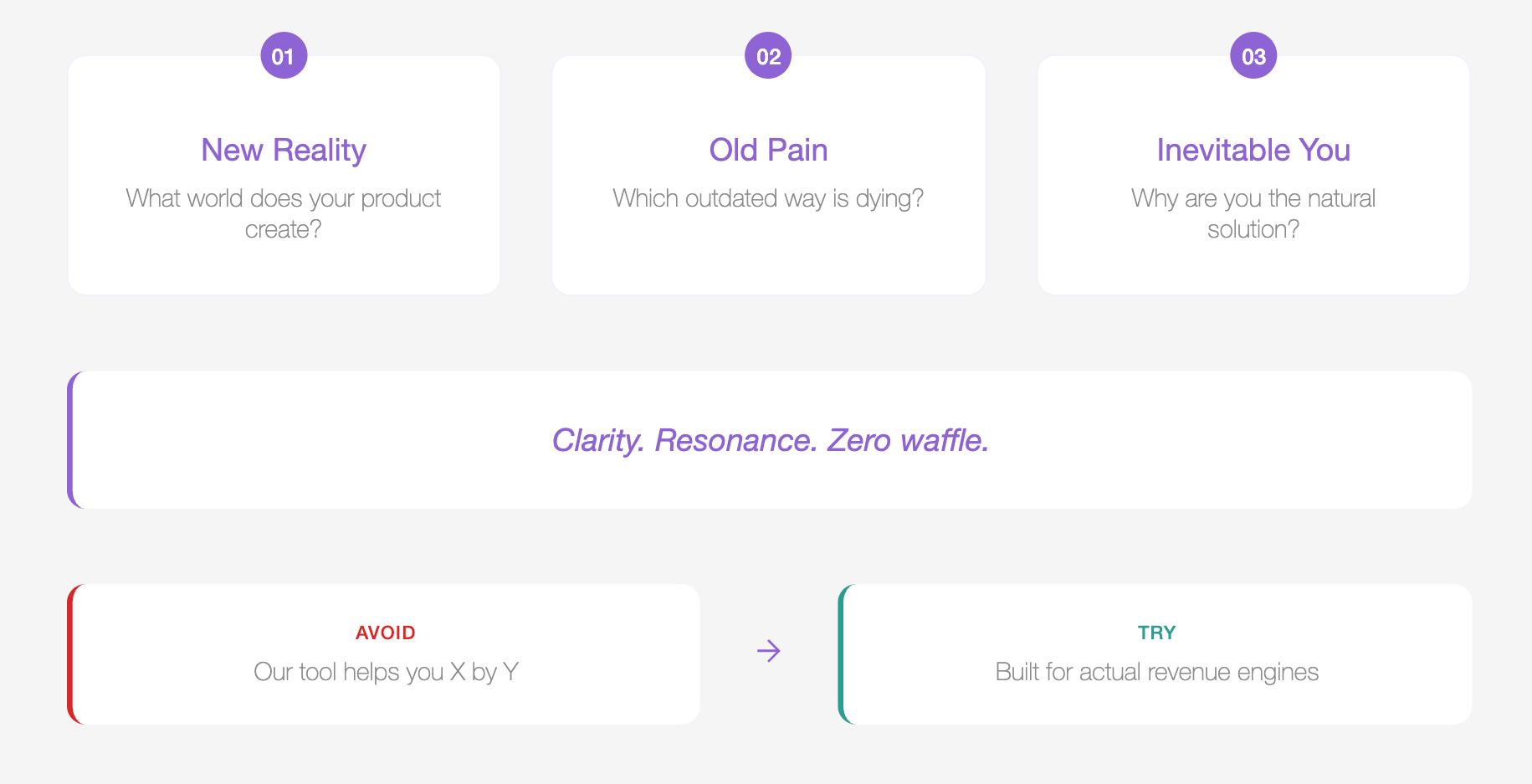
- What new reality does your product create?
- What old way is dying (and why is it painful)?
- Why are you the inevitable solution - not just another player?
The best demand gen is embedded in story. This is why companies like Linear and Vanta win - without flooding your inbox. They make you want to belong to their version of the future.
Pro tip: Drop the “Our tool helps you X by Y” nonsense. Try this instead:
“Traditional CRMs were built for reps. Ours is built for the actual revenue engine - the workflows that drive pipeline forward.”
Clarity. Resonance. Zero waffle.
Dark Social is Very Real (And Very Measurable)
“But how will we track it?”
Ah yes, the corporate cry of analytics paralysis.
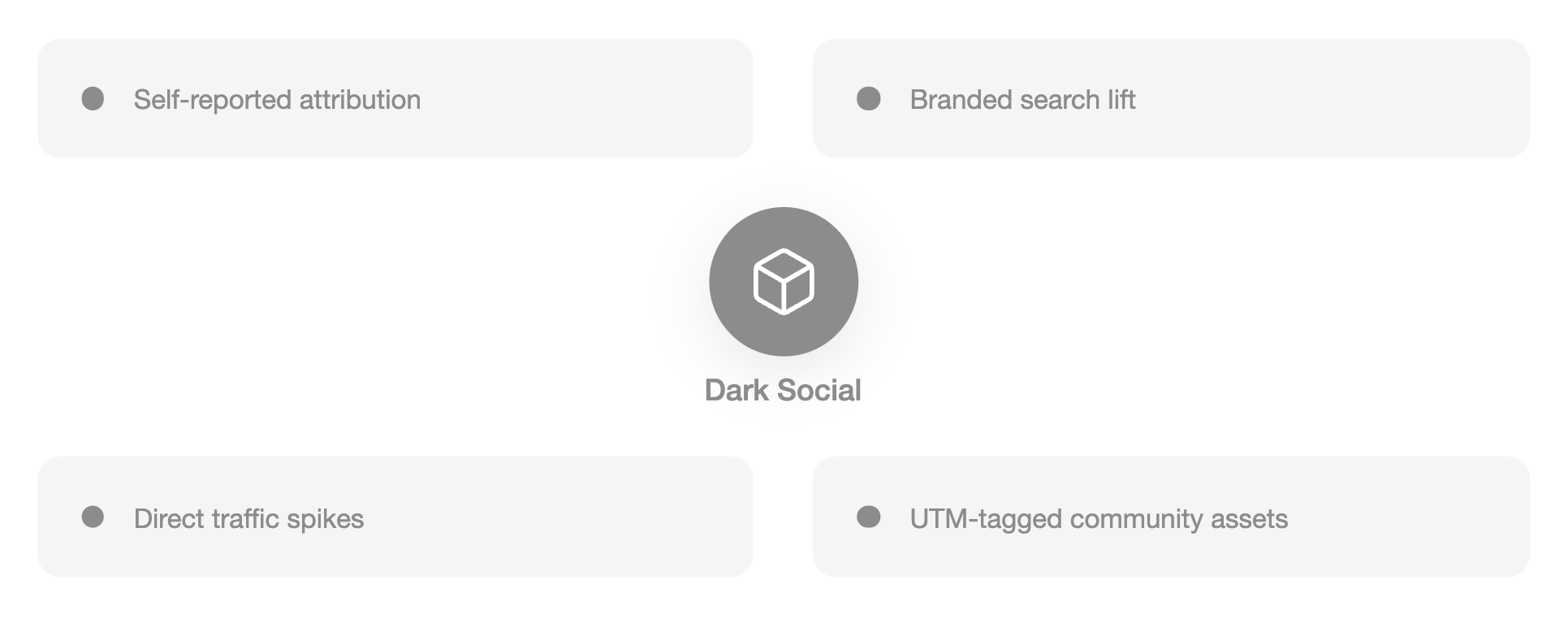
Dark social = the places attribution software can’t see (Slack groups, DMs, podcasts, screenshots of posts). But guess what? That’s where the best recommendations live.
2025 B2B winners:
- Track self-reported attribution ("How did you hear about us?") like it’s gospel.
- Monitor lift in branded search, direct traffic, and demo requests after major content or events.
- Use UTM-tagged assets in unexpected channels (e.g., Notion docs shared in communities).
→ Measurement isn’t dead. It’s just moved downstream.
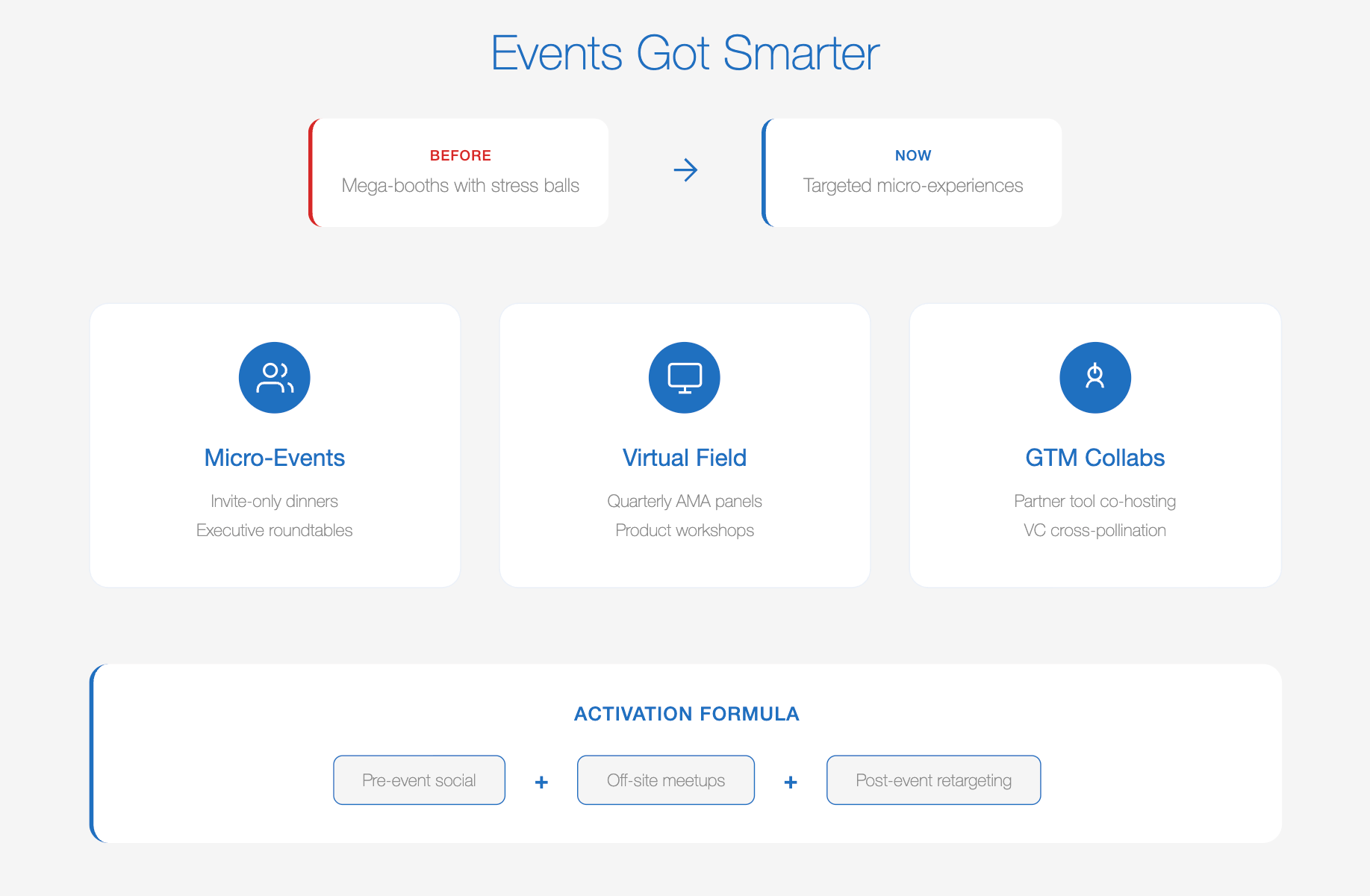
Event Strategy Isn’t Dead - It’s Just Shrunk and Got Smarter
No more mega-booths with stress balls and beer koozies. The modern event playbook is all about:
- Micro-events for targeted segments (invite-only dinners, exec roundtables, product workshops).
- Virtual field marketing: host quarterly ‘Ask Me Anything’ panels with product managers or customer engineers.
- GTM collabs: co-host with partner tools or VCs to cross-pollinate audiences.
And yes, still go to the big conferences. But activate your presence with pre-event social, off-site meetups, and post-event retargeting. Otherwise, you’re just another logo on a lanyard.
Scorecard: 2025 B2B Demand Gen Tactics
| Strategy | Status | Comment |
|---|---|---|
| SEO & content clusters | ✅ Must-do | Still gold—but only if mapped to buying jobs |
| Gated whitepapers | ❌ Retire | Nobody’s downloading them. Not even your mum. |
| Intent-based ads (search, G2) | ✅ Scalable | Great for capture; needs tight targeting |
| Founder/exec LinkedIn presence | ✅ Priority | No brand voice? Borrow theirs. |
| Webinars | ⚠️ Evolve | Make it interactive or don’t bother |
| Cold outbound | ⚠️ Laser-only | Works with killer targeting + creative copy |
| Community-led growth | ✅ Moat | Not fast, but compounding and defensible |
| Product-led demons/trials | ✅ Table stakes | Must be seamless, value-first, no hassle |
Quick Wins That Don’t Suck
- Add a “Your Problem” section to your homepage. Instant relevance.
- Swap your lead magnet for an ungated Notion playbook. Build goodwill.
- Create a visual explainer post for every key feature - people process visuals 60,000x faster than “robust, scalable, secure” nonsense.
- Test a "Why Now" message: what’s changed in the market that makes your product urgent today?
It’s Not About Getting Clicks - It’s About Getting Chosen
Demand gen in 2025 isn’t lead gen with a new hat. It’s about being chosen long before the buyer hits your site. It’s about giving people the tools, the stories, and the trust to bring you into the deal.
So no, you don’t need more ebooks. You need more clarity. More proof. More relevance.
Want to make demand generation feel less like chasing and more like attracting? Start with your story. Or get in touch - we’ll help you tell it properly.
FAQ
1. What’s the difference between lead generation and demand generation?
Lead generation is about collecting contact information- often prematurely- while demand generation focuses on building awareness, trust, and interest before someone is ready to engage. Think of demand gen as the warm-up act; lead gen is asking for the sale. In 2025, companies that separate the two (and prioritize demand creation first) build stronger pipelines.
2. Are MQLs still relevant for measuring demand gen performance?
Only if you're also tracking what percentage of them turn into revenue. Most high-performing SaaS teams now consider MQLs a vanity metric. They prefer tracking pipeline influenced, self-reported attribution, qualified meeting rates, and deal velocity. MQLs alone won’t help you prioritize or forecast.
3. What’s the role of content marketing in demand generation today?
Content is the engine behind modern demand gen- but the format and purpose have evolved. It’s no longer about cranking out SEO blogs and hiding everything behind a form. Today’s best content educates, entertains, and earns trust across formats: carousels on LinkedIn, interactive tools, ungated Notion docs, and founder POV videos.
4. How can we create demand if people aren’t actively searching for our product category?
You manufacture interest by framing the problem - not pushing the product. Share real stories of pain solved, shift perspectives through founder content, and make the status quo feel risky. If you teach buyers to see a new need, you’ll own the category when they’re ready to act.
5. What’s working in paid ads for B2B SaaS demand gen right now?
High-performing campaigns are focused on either clear intent capture (search ads, G2 ads) or creative demand creation (LinkedIn video, YouTube pre-roll, newsletter sponsorships). Ads that simply push “Book a demo” to cold audiences are ignored. Instead, lead with insight, not sales pitches.
6. Should we still host webinars in 2025?
Yes- but only if they’re actually useful. Traditional salesy webinars are tanking in attendance and replay value. What works now are live AMAs, customer walkthroughs, behind-the-scenes product strategy, or co-branded sessions with partners. If your audience wouldn’t pay attention without the “calendar hold,” it’s probably not worth running.
7. How do we measure the impact of dark social channels?
You can’t measure dark social directly, but you can infer its impact. Ask “How did you hear about us?” on forms (and trust the answers). Look for spikes in branded search and direct demo requests after high-performing posts or podcast episodes. Attribution isn’t broken - it’s just blended.
8. What’s a smart way to involve our leadership team in demand generation?
Get your founders and execs active on LinkedIn - to narrate, not to pitch. They should share how they think about problems, reflect on product trade-offs, and interact with customer conversations. Their credibility creates gravity around the brand. A ghostwriter or content partner can help them stay consistent.
9. Do SEO and blogs still matter for B2B demand gen?
Absolutely- but the bar is higher. SEO content must align with jobs-to-be-done and show depth, not just keywords. Blog posts that act as true buying guides, teardown competitors, or explain complex decisions still drive meaningful traffic. But the goal isn’t volume- it’s trust and intent.
10. What’s the biggest mistake companies make with demand generation?
Treating it like a lead faucet. Demand gen isn’t about pushing gated content and hoping it converts - it’s about playing the long game to earn buyer confidence. Companies that ignore positioning, skip audience research, or over-index on automation end up with empty clicks and empty pipelines.


